IDTS Full Form In Chat: Meaning, Examples & Uses
Wondered why you have been receiving messages containing the term IDTS? You are not alone. The idts full form in chat is a simple one, yet it may vary in tone depending on the situation.
This guide defines what it is, how people use it and when you should or should not use it.
What Is the IDTS Full Form In Chat?
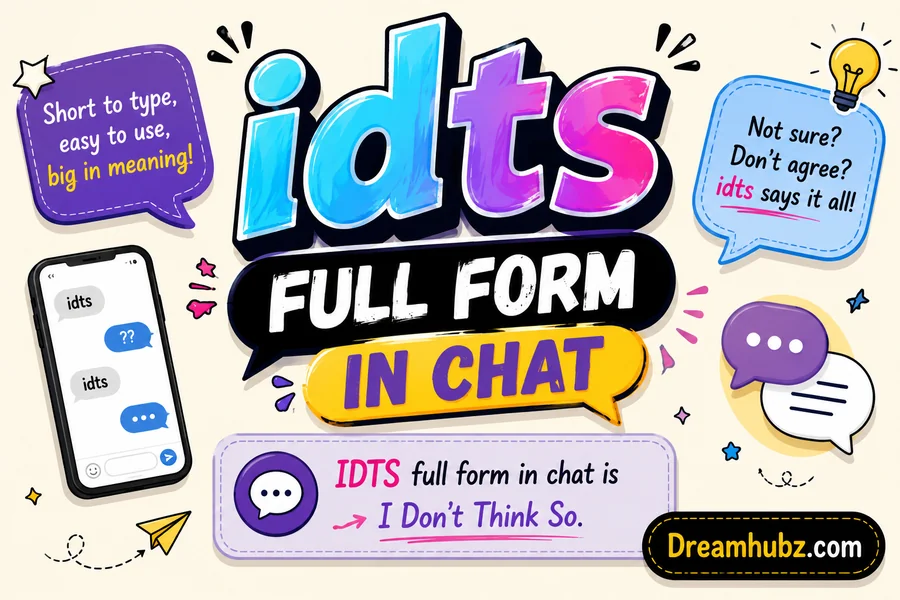
The idts full form in chat is:
IDTS = I Don’t Think So
They also use it when talking informally to indicate skepticism, dissent, or doubt. It is brief, fast and it is typical of texting and social media conversations.
Quick Answer –
- Complete form: I Don’t Think So.
- Use: To indicate doubt or polite disagreement.
- Tone: Informal, even neutral, occasionally even slightly dismissive.
- Application: Chats, texts, social media, gaming conversations.
What Does IDTS Mean In Different Contexts?
At its core, IDTS always means “I don’t think so.” But the tone depends on how and where it is used.
1. Casual Disagreement
You may use IDTS when you disagree but want to keep things light.
Example:
- Friend: “This movie is the best one this year.”
- You: “IDTS. I liked the last one more.”
2. Expressing Doubt
Sometimes it shows uncertainty instead of direct disagreement.
Example:
- “Do you think it will rain today?”
- “IDTS. The sky looks clear.”
3. Soft Rejection
It can also be a gentle way to say no.
Example:
- “Are you joining the call tonight?”
- “IDTS. I have some work to finish.”
Why People Use IDTS In Chat
Short forms save time. They also match the fast pace of online conversations. The idts full form in chat is popular because:
- It is quick to type
- It feels natural in texting
- It avoids long explanations
- It keeps conversations moving
People often prefer short replies, especially in group chats or fast conversations.
When To Use IDTS
You can use IDTS in many informal situations. Here are the most common ones:
✔ In Text Messages
Use it when chatting with friends or classmates.
✔ On Social Media
It fits well in comments or replies.
✔ In Gaming Chats
Gamers often use short forms like IDTS to respond quickly.
✔ In Group Chats
It helps you reply fast without writing full sentences.
When To Avoid IDTS
Even though the idts full form in chat is useful, it is not always appropriate.
✖ In Formal Emails
Avoid it in work emails or professional communication.
✖ In Academic Writing
Always use full sentences in essays or reports.
✖ In Serious Conversations
It may sound dismissive if the topic is important.
Meanings Across Platforms Table
Different platforms may slightly change how IDTS feels. The meaning stays the same, but tone varies.
| Platform | Meaning of IDTS | Tone | Example |
| I Don’t Think So | Casual | “IDTS we are meeting today.” | |
| I Don’t Think So | Light, quick | “IDTS this trend will last.” | |
| I Don’t Think So | Neutral | “IDTS that’s correct.” | |
| Snapchat | I Don’t Think So | Playful | “IDTS 😂” |
| Gaming Chats | I Don’t Think So | Fast, direct | “IDTS we can win this round.” |
Real-Life Examples Of IDTS In Chat
Here are some natural ways people use the idts full form in chat:
- “IDTS that’s a good idea.”
- “IDTS I can finish it today.”
- “IDTS he will agree to this.”
- “IDTS this is the right answer.”
- “IDTS we should go there now.”
Notice how each sentence feels short and direct.
Tone Matters: How IDTS Can Sound
Even though IDTS is simple, tone can change how it feels.
Neutral Tone
- “IDTS it will happen.”
Friendly Tone
- “IDTS haha, but let’s see.”
Slightly Dismissive Tone
- “IDTS. That doesn’t make sense.”
To avoid sounding rude, you can soften it by adding a few words.
Better version:
- “IDTS, but I could be wrong.”
Similar Terms & Alternatives Table
Sometimes you may want to use something other than IDTS. Here are some alternatives with similar meanings.
| Term | Full Form / Meaning | When to Use | Example |
| IDC | I Don’t Care | Indifference | “IDC about the result.” |
| IMO | In My Opinion | Sharing views | “IMO, this is better.” |
| IKR | I Know, Right | Agreement | “IKR, it’s so obvious.” |
| NVM | Never Mind | Dropping topic | “NVM, it’s fine.” |
| IDK | I Don’t Know | Uncertainty | “IDK the answer.” |
| Nah | Informal No | Casual rejection | “Nah, I’m good.” |
These options help you adjust tone based on the situation.
Common Mistakes When Using IDTS
Many people use the idts full form in chat without thinking about tone. Here are a few mistakes to avoid:
1. Using It in Serious Talks
It can sound cold or uninterested.
2. Overusing It
Repeating IDTS too often may feel lazy.
3. Using It Without Context
Short replies can confuse others if the topic is unclear.
Read Also: CYA Meaning in Text: A Complete Guide to This Common Slang
Tips To Use IDTS Naturally
Want to sound more natural? Follow these simple tips:
- Add a reason:
“IDTS. The timing is not right.” - Keep it polite:
“IDTS, but let’s check again.” - Match the tone:
Use emojis or extra words when needed. - Avoid it in formal settings:
Write full sentences instead.
Why Understanding Chat Slang Matters
Chat language continues to evolve. Being aware of such terms as the idts full form in chat can assist you:
- Learn how to understand online discussions.
- Naturally respond.
- Don’t be confused or miscommunicate.
- Keep in touch with online trends.
It will also assist you in changing your tone according to your audience.
Read Also: CYA Meaning in Text: A Complete Guide to This Common Slang
Final Thoughts
The abbreviation of idts full form in chat is “I Don’t Think So”. It is brief, concise and commonly used in informal discourse. Although it is helpful, tone is important. During small talk, it is a good thing. It should be avoided in serious or formal places.
Use it when you wish to show doubt in a hurry. You can add some words to be more polite. And never be the same in every circumstance.
FAQs:
What is the IDTS full form in chat?
IDTS stands for “I Don’t Think So.”
Is IDTS rude?
Not always. It depends on tone and context. It can sound neutral or slightly dismissive.
Where is IDTS used?
It is used in texting, social media, and online chats.
Can I use IDTS in formal writing?
No. It is best for casual conversations only.
What are alternatives to IDTS?
You can use phrases like “I don’t think so,” “maybe not,” or “probably not.”