Lumon Definition and Meaning: What It Stands For in Text
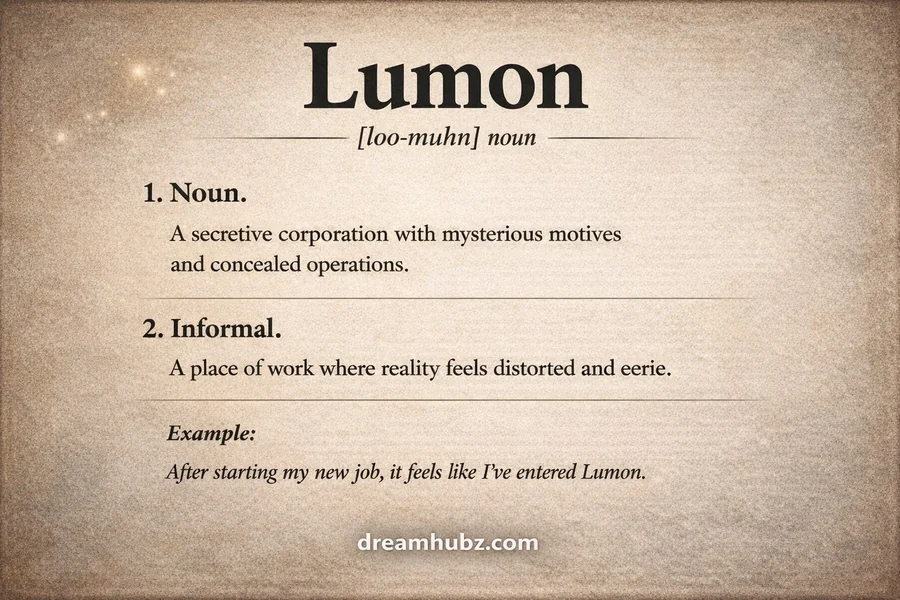
The Lumon definition refers to a word used in text messages and online chats. It comes from the TV show Severance, where Lumon is a big company that controls people. Online, it can also mean brightness, mystery, or a cool username.
People are curious about Lumon definition because it is unusual and interesting. The word appears in social media, forums, and fan discussions. Many want to know what it really means and how to use it in messages.
The Lumon definition shows two main uses. It can describe strict, calm, or robotic behavior. It can also show brightness, glowing personality, or a creative online name. This makes it a popular and flexible word.
🟨 What Does “Lumon” Mean?
The term Lumon is not listed in standard English dictionaries, but it has grown in popularity as both a pop culture reference and a piece of text slang. The most well-known interpretation comes from the Lumon Severance reference in the hit Severance TV show on Apple TV+. In this series, Lumon represents a mysterious corporate organization where employees live double lives. The company’s name is associated with themes such as corporate culture, strict rules, identity control, and emotional suppression. When used in this context, mentioning Lumon often brings ideas of robotic behavior, compliance, and dystopian vibes into a conversation.
On the other hand, Lumon text slang has evolved as a stylized version of “lumen,” which means light. In online communities, usernames, and creative handles, Lumon in text can symbolize glow/illumination, brightness, or a person’s positive presence. People might use it to describe a bright personality or even as a unique tag with no particular meaning beyond individuality. This dual nature makes the term both intriguing and versatile for casual and professional discussions.
🟨 Understanding the Tone and Implication
When someone uses Lumon in conversation, the tone and context are crucial to understanding what it truly implies. A simple phrase like “That’s so Lumon” could mean different things depending on the speaker and audience. In a corporate discussion, it may describe someone who is overly formal or ultra-professional, adhering strictly to rules like the employees in the Severance TV show. In a casual online chat, it could compliment someone’s glow, referencing Lumon vibes meaning as brightness or positivity.
Furthermore, using Lumon can signal a variety of personality types. Someone described as having a Lumon personality type may appear calm, composed, and emotionally reserved. In some cases, it reflects a mysterious personality that is difficult to read. The term also interacts with cultural ideas of control, identity, and compliance, connecting it to corporate culture, workplace behavior, and even dystopian vibes. Understanding these subtle connotations helps you respond appropriately and appreciate the term’s layered meanings.
Read Also: DPMO Meaning Explained: Hiatus Meaning & Usage Guide
🟨 Polite and Professional Alternatives to “Lumon”
In professional or sensitive settings, using Lumon directly may confuse people who are unfamiliar with the term. Fortunately, there are several thoughtful alternatives to express similar ideas. For instance, if Lumon in text refers to brightness or insight, you can use enlightened. If it implies secrecy, mystery, or intrigue, the word mysterious works well. In cases where the context points to overly formal behavior, phrases like corporate-coded or robotic convey the same meaning while remaining clear and professional.
Other alternatives include stoic, describing a calm and composed demeanor; dystopian, reflecting controlled or unsettling systems; glowing, for positive energy or brightness; and synthetic, which critiques artificial behavior. For extreme devotion or blind allegiance, cult-like and ideologically committed capture the nuances of a Lumon Severance reference. These alternatives ensure clarity, avoid misinterpretation, and allow for professional or casual usage depending on the context.
🔹 1. Enlightened
When Lumon is used to describe insight or brightness, enlightened is a polite alternative. For example, saying, “That’s an enlightened perspective,” conveys respect for someone’s intelligence or clarity without referencing pop culture.
🔹 2. Mysterious
If the term implies secrecy or intrigue, mysterious captures the essence. For instance, “There’s something mysterious about that setup” reflects a mysterious personality without confusion.
🔹 3. Corporate-Coded
For professional or work-related contexts, corporate-coded describes someone following rigid rules or displaying robotic behavior. It communicates workplace conformity without sounding negative.
🔹 4. Robotic
The word robotic conveys emotionless or formulaic behavior. “Her answers felt robotic and rehearsed” reflects a Lumon personality type tied to control and compliance.
🔹 5. Stoic
Stoic describes calm, composed, or emotionally reserved behavior. “He remained stoic through it all” emphasizes professional composure, often associated with emotional reserve.
🔹 6. Dystopian
For describing controlled or unsettling systems, dystopian mirrors the corporate environment in the Severance TV show. “That policy felt downright dystopian” can describe workplace rigidity or societal control.
🔹 7. Glowing
If Lumon is interpreted as brightness or positivity, glowing works perfectly. “She looked glowing in that presentation” captures the essence of glow/illumination.
🔹 8. Synthetic
When a system or personality feels artificial, synthetic is a suitable choice. “There’s a synthetic charm to it” subtly critiques corporate culture or controlled behavior.
🔹 9. Ultra-professional
Ultra-professional describes polished or highly formal behavior. “He came across as ultra-professional—almost too much” captures the Lumon Severance reference in a work context.
🔹 10. Cult-like
For extreme dedication or loyalty, cult-like conveys the same sense as employees in Severance TV show. “The team had a cult-like dedication to the brand” warns of intense corporate or group devotion.
🔹 11. Ideologically Committed
Ideologically committed describes dedication to a mission or belief system. “They were ideologically committed to the mission” works in academic or professional analysis.
Read Also: YNS Meaning in Text, TikTok & Slang Guide 2026
🟨 When to Use and When Not to Use “Lumon”
It’s important to assess your audience before using Lumon in text. If you are chatting with fans of the Severance TV show, the term may be understood easily. In contrast, using it in a business email or professional meeting can confuse readers unfamiliar with Lumon pop culture. Consider context, tone, and the familiarity of your audience with text slang terms. Often, alternatives such as mysterious, robotic, or glowing are safer and more universally understood.
🟨 How to Choose the Right Alternative
Selecting the right alternative to Lumon depends on your setting and intent. The table below summarizes when to use certain words:
| Situation | Meaning of “Lumon” | Best Alternative |
| Pop-culture joke | Satirical, humorous | Dystopian, Cult-like |
| Business setting | Ultra-corporate, formal | Robotic, Ultra-professional |
| Emotional setting | Calm, unreadable | Stoic |
| Inspirational | Bright, glowing | Enlightened, Glowing |
| Critical analysis | Controlled, artificial | Synthetic, Ideologically committed |
This guide helps you use Lumon meaning effectively, whether in casual chats, online forums, or professional communication.
🟨 Examples of “Lumon” in Context (with Interpretations)
Understanding real-life examples of Lumon usage can clarify its meaning:
Example 1: “He’s got that Lumon mindset—focused but kind of unsettling.” This describes someone goal-oriented yet emotionally distant, reflecting robotic behavior.
Example 2: “This office feels so Lumon, like it’s straight out of a show.” Here, the workspace evokes minimalist aesthetics, control, and dystopian vibes.
Example 3: “Your glow-up is pure Lumon energy!” In this context, Lumon represents glow/illumination, celebrating a positive transformation.
Example 4: “Don’t go full Lumon on me—we’re just brainstorming.” This warns against being overly formal or ultra-professional, limiting creativity.
Example 5: “This project is giving major Lumon vibes—no feedback, just orders.” It critiques top-down corporate culture and lack of collaboration.
Example 6: “She was totally Lumon—calm, clean, and a little creepy.” Describing a Lumon personality type, emotionally reserved but polished.
Example 7: “Our startup is the anti-Lumon—we’re all about transparency.” Contrasts identity and control, promoting openness over rigidity.
Example 8: “He Lumoned through that interview—no emotion, just facts.” Emphasizes robotic behavior in professional performance.
Example 9: “That logo is so Lumon—it’s unsettling and minimalist.” Critiques minimalist aesthetics influenced by Severance TV show style.
Example 10: “She looked almost… lumon-like. Glowing but unreadable.” Shows a balance between brightness and emotional reserve.
Example 11: “We’re not building a Lumon culture—we want creativity and freedom.” Highlights rejection of strict corporate culture for innovation and freedom.
Exploring the Origins of Lumon in Text Slang
The term Lumon first appeared as part of online text slang, creative usernames, and casual chats. Its rise is closely tied to internet communities experimenting with new words and stylized handles. People use it to convey glow/illumination, uniqueness, or even mysterious online identities. Understanding this origin helps in grasping the flexible meaning of Lumon in text.
Over time, Lumon became more than just a username or tag. It began appearing in memes, forums, and pop culture references. Its dual meaning allows it to describe bright personalities or allude to Severance TV show themes, showing how internet culture shapes language. The evolution of Lumon usage demonstrates the creative power of digital communication.
Read Also: IMK Meaning in Text: Understanding and Using These Terms
Lumon as a Pop Culture Reference
Lumon gained mainstream attention due to its presence in the Severance TV show. In the series, it represents a corporate entity enforcing strict rules and identity control. Fans of the show often use the term to describe environments or behaviors that are overly controlled, polished, or ultra-professional, connecting fiction to real-world observations about corporate culture.
This pop culture use has created a new layer of meaning for Lumon. Beyond workplace references, it also signals dystopian vibes, robotic behavior, and emotional reserve. Online conversations now feature phrases like “Lumon vibes” to describe people, spaces, or systems that feel eerily compliant or mysterious, reflecting broader societal critiques.
Understanding Lumon Personality Type
When someone is described as having a Lumon personality type, it often refers to a calm, composed, and sometimes mysterious demeanor. Such individuals exhibit emotional reserve, structured thinking, and robotic behavior in professional or social settings. The phrase captures both admiration and critique depending on context, highlighting subtle personality traits.
The concept of a Lumon personality also interacts with identity and control. In corporate or creative environments, these traits can signal professionalism, analytical thinking, or detachment. Fans of the Severance TV show often use the term metaphorically, combining both text slang terms and pop culture to comment on workplace behavior or interpersonal interactions.
Lumon and Workplace Behavior
In the context of corporate culture, using Lumon can describe rigid systems or ultra-formal behavior. Employees who strictly follow protocols or exhibit a polished, emotionless approach may be referred to as having Lumon vibes. It reflects the influence of structured workplace norms and expectations on personal demeanor.
This concept extends beyond critique. Some organizations use Lumon to highlight professionalism, stoicism, or calm problem-solving. Recognizing Lumon usage in workplace discussions helps identify patterns of control, hierarchy, and behavioral norms. The term becomes a lens to analyze corporate identity, performance, and the balance between efficiency and human connection.
Lumon in Online Usernames and Handles
Many internet users adopt Lumon as a creative handle or username. The word’s association with glow/illumination or mystique makes it attractive for social media profiles, gaming accounts, and online forums. It signals uniqueness and often conveys a mysterious personality, attracting attention in digital spaces.
This trend demonstrates the versatility of Lumon in text. Its use is not limited to literal meaning but also symbolic identity expression. People blend references from Severance TV show, creative handles, and text slang to craft memorable online personas, showing how digital language merges fiction, self-expression, and social interaction.
Emotional and Aesthetic Implications of Lumon
Lumon can describe emotional tone or aesthetic quality in both people and environments. For instance, a minimalist office design or a controlled social space may be called Lumon, reflecting clean lines, emotional reserve, and structured presentation. The term links visual aesthetics to behavioral expectations.
In personal interaction, Lumon usage conveys balance between presence and restraint. Someone may appear glowing, mysterious, or composed, demonstrating calm confidence and subtle charisma. These attributes connect to broader themes of identity and control, dystopian vibes, and the careful blending of appearance and demeanor in professional or social spaces.
Interpreting Lumon Vibes in Everyday Life
People use the term Lumon vibes meaning to describe atmospheres, personalities, or behaviors. For example, a quiet, polished individual or a meticulously organized environment may evoke Lumon vibes. It blends online slang, pop culture, and personality observations into a single descriptive term.
This interpretation shows the flexibility of Lumon in text. From digital slang to real-life commentary, it captures nuances of corporate culture, emotional reserve, and identity. Recognizing Lumon vibes helps navigate social, professional, and online interactions with insight, reflecting both humor and subtle critique in everyday communication.
FAQs
What is Lumon about?
Lumon is a fictional corporation in the Severance TV show, representing strict corporate control, identity separation, and dystopian workplace culture.
What is called lumen?
A lumen is a unit of measurement for light, used to indicate brightness or illumination.
Is it lumen or lumin?
The correct scientific term is lumen, though “lumin” is sometimes used stylistically in names or creative contexts.
What does Lumon mean in connections?
In connections or social contexts, Lumon can imply structured, controlled, or mysterious interactions, reflecting corporate culture or robotic behavior.
Final Thoughts
Lumon definition shows that it is a special word used in both text slang and pop culture. It comes from the TV show Severance, where Lumon is a big company that controls everything. The word also appears online as a cool username or tag. People use it to talk about bright personalities, mystery, or strict behavior. Knowing the Lumon definition helps you understand what someone means when they say it in messages, social media, or casual chats.
Understanding the Lumon definition can help you in school, work, and online conversations. You can see if it talks about brightness, calm behavior, or corporate control. Using this knowledge lets you respond clearly and confidently. It also helps you notice how people describe personalities, workplaces, or styles with the word Lumon.