
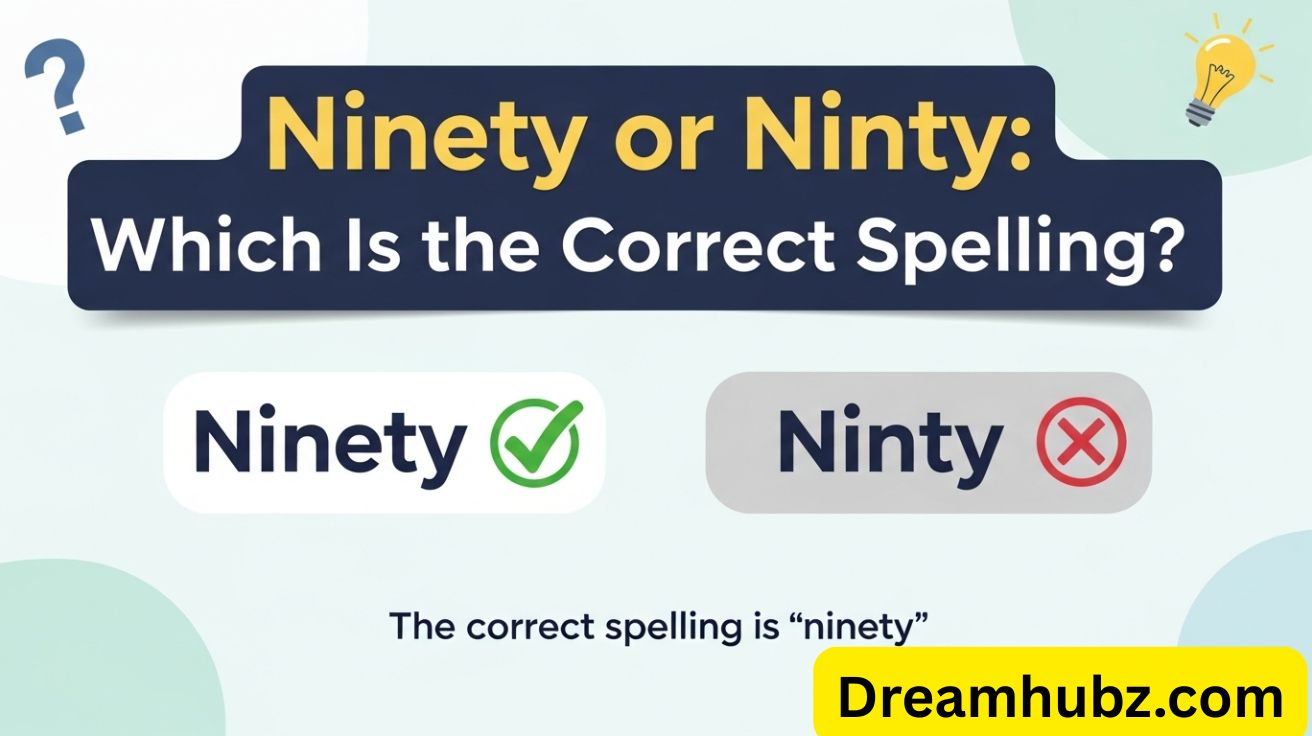
Ninety or Ninty: Which Is the Correct Spelling?
The phrase “ninety or ninty” refers to the common confusion about the correct spelling of the number 90. The right form is ninety, while ninty is only a mistake. It is one of the most frequent spelling mistakes in English numbers. Knowing this difference improves writing and communication.
Have you ever written ninty instead of ninety? Many people make this small mistake. It happens because the word sounds different from how it is spelled. This little error can change how your writing looks to others.
The correct spelling of number 90 comes from Old English. It keeps the word “nine” before adding “ty.” People misspell it because of sound and habit. Learning ninety spelling helps avoid errors in both formal and casual writing.
Why It’s “Ninety” and Not “Ninty”

The spelling of the number 90 in English is ninety, not ninty. Although the word sounds like ninty when spoken quickly, English follows specific number spelling rules that keep the word consistent with its base, which is nine. The extra e in nine is not removed when forming ninety, and that is why “ninety” is the correct spelling of ninety.
For example, you would write “I spent ninety dollars” rather than “I spent ninty dollars.” The latter is one of the most common spelling mistakes in numbers and can reduce clarity in both formal and casual writing.
Understanding the Origin of “Ninety”
Old English Roots
The story of ninety spelling goes back hundreds of years. In Old English numbers, the word for ninety was nigontig. This came from nigon, which meant nine, and tig, meaning a group of ten. Over centuries, this word evolved into “ninety,” while people continued to pronounce it in a way that sometimes makes it sound closer to “ninty.”
To see how this happened, let us compare other number words that followed a similar path.
| Old English Word | Modern Spelling |
| Twentig | Twenty |
| Þrītig | Thirty |
| Fēowertig | Forty |
| Nigontig | Ninety |
This table shows how words were shortened and reshaped over time. Notice that in “forty,” the u was dropped, but in “ninety,” the e stayed to preserve its link to nine plus ty.
Why Spelling Accuracy Matters
Professionalism in Writing
Correct spelling shows credibility in writing and attention to detail. In professional situations such as reports, contracts, or proposals, even a small mistake like writing ninty instead of ninety can make the reader question your expertise. These professional writing mistakes can reduce trust in your work. A client who sees “ninty thousand dollars” in a business proposal might assume you are careless, even if your calculations are accurate.
Clarity in Communication
Spelling mistakes affect clarity in communication. Using “ninty” in a report, article, or even a group chat can confuse the reader. When readers encounter spelling mistakes in English numbers, their attention shifts from your message to your error. This is why spelling consistency matters so much in both formal and casual contexts.
As one writing coach says: “Your words shape others’ perceptions of your professionalism and competence.”
The Common Confusion: Why People Write “Ninty”
Phonetic Similarities
One reason people misspell ninety is phonetic spelling errors. When we pronounce ninety, the sound of the e in nine is almost silent, making it sound like ninty. This creates confusion because the spelling does not match the way the word sounds.
Misunderstanding Spelling Rules
Another cause of this mistake is misunderstanding number spelling rules. English has patterns like the “drop rule,” where a final vowel is sometimes removed before adding a suffix. For example, in “write + ing,” the “e” is dropped, forming “writing.” However, this rule does not apply to numbers. The correct spelling of ninety keeps the “e” from nine to maintain the root word. Forgetting this rule leads to common grammar and spelling errors such as “ninty.”
Read Also : Family’s or Families’ or Families?
Practical Tips to Avoid Writing “Ninty”
1. Mnemonics for Memory
An easy way to remember the spelling of number 90 is to think: “Ninety is nine plus ty.” This simple phrase shows that ninety is built directly from “nine.” Using spelling tips and mnemonics like this can prevent mistakes.
2. Leverage Technology
Modern tools like Microsoft Word, Google Docs, or Grammarly can catch misspelled numbers instantly. These tools not only fix “ninty” but also improve your overall business writing accuracy.
3. Proofread Aloud
Reading your writing aloud can help you notice mistakes that look correct in your head. By hearing how words sound, you can spot when a word like “ninty” doesn’t look right on the page.
4. Practice Writing
Writing practice helps build memory. Try using the word ninety in different contexts. For example:
- “The budget is ninety dollars.”
- “He scored ninety points in the game.”
- “The company achieved ninety percent growth.”
The more you write the word correctly, the more natural it becomes.
The Impact of Misspellings in Real Life
Examples of Miscommunication
Consider this example: A business email states, “The project will cost ninty thousand dollars.” The client may pause and question whether it was a typo or whether the writer lacks attention to detail. Even though the meaning is clear, the spelling mistakes in English numbers distract from the professionalism of the message. In competitive fields, such small errors can harm reputations.
Formal/precise vs. Casual Writing
Formal Writing
In formal vs casual writing, spelling accuracy becomes even more important. In academic work, professional reports, legal documents, or financial contracts, writing ninty instead of ninety is unacceptable. These documents rely on exact language, and professional writing mistakes reduce trust and authority.
Casual Writing
Even in casual settings like texting or group chats, it is best to use correct spelling. Writing ninty might not cause major harm, but it still shows a lack of care. Correct spelling avoids unnecessary clarification and strengthens your credibility in writing.
The Importance of Language Consistency
Spelling consistency is a sign of respect for your readers. One small error can pull their attention away from your ideas. Whether you are a student, professional, or casual writer, maintaining accuracy shows that you value communication. Avoiding common English misspellings like ninty helps your message remain clear and focused.
Practical Applications of “Ninety”

Examples in Context
The word ninety appears in everyday life, from business to daily conversations. For instance, in a budget report you might write: “The total is ninety dollars.” In sports coverage, you might see: “The player scored ninety points.” In casual talk: “Can I borrow ninety bucks?”
Using Numbers and Words
In formal documents, writers often use both numbers and words for clarity. For example: “The payment is $90 (ninety dollars).” This prevents any possible confusion and aligns with business writing accuracy.
Commonly Misspelled Words and Their Causes
“Ninty” is not the only misspelled number. Other numbers often confuse writers too. Here is a table of frequent errors and their correct forms.
| Misspelled Word | Correct Word | Why It Happens |
| Ninty | Ninety | Phonetic spelling errors and misapplied rules |
| Fortyty | Forty | Adding extra letters unnecessarily |
| Threty | Thirty | Misunderstanding spelling mistakes in English numbers |
These examples show how easy it is to make mistakes, but also how simple it is to correct them with practice.
The Confusion Between Ninety and Ninty
Many people wonder whether the correct spelling of number 90 is ninety or ninty. The truth is that only ninety is correct, while ninty is a common mistake. This confusion happens because the way the word sounds in daily speech makes it easy to misspell.
The ninety spelling keeps the base of the word “nine” intact. Writers often drop the silent “e,” creating the incorrect form ninty. Such phonetic spelling errors are among the most common English misspellings. Knowing the rule helps ensure spelling consistency in both professional and casual writing.
Why Ninety Is the Correct Spelling
The correct spelling of ninety comes from Old English numbers, where the word evolved as part of language history. The original form was nigontig, combining “nigon” (nine) with “tig” (group of ten). Over centuries, this turned into “ninety,” preserving the nine plus ty construction.
On the other hand, ninty has no historical or grammatical base. It is simply a mistake caused by sound patterns. Following number spelling rules ensures proper usage. Understanding the history and evolution of numbers prevents professional writing mistakes and strengthens credibility in writing.
The Role of Spelling in Communication
Correct spelling is more than just a detail; it shows business writing accuracy and clarity in communication. A proposal that uses “ninty thousand dollars” instead of “ninety thousand dollars” might look careless to a client. Such errors affect how seriously your writing is taken.
Even in casual settings, misspelled numbers like ninty can create confusion. While friends may understand, it reduces the quality of your writing. Choosing the correct spelling demonstrates respect for language and avoids unnecessary misunderstanding. Small details like this shape perceptions of competence and professionalism.
Common Reasons People Write Ninty
One of the biggest reasons people misspell ninety as ninty is pronunciation. The ninety meaning in spoken English often drops the silent “e,” making the word sound like “ninty.” This leads to phonetic spelling errors, especially for learners of English or writers rushing through their work.
Another reason is misunderstanding spelling mistakes in English numbers. Many assume that the final “e” in “nine” should be dropped when adding “ty.” However, this rule does not apply. Remembering the correct spelling of ninety keeps your writing accurate and avoids one of the most common spelling mistakes in numbers.
Practical Ways to Remember Ninety
A simple trick to avoid the error is to think of ninety as nine plus ty. This shows the base word “nine” is still present, and you only add “ty” to make the larger number. Such spelling tips and mnemonics are useful for students and professionals alike.
Practicing with short sentences also helps. Write examples like, “The book costs ninety dollars” or “He scored ninety points.” Repetition creates habit, and technology like spell check can help too. With time, you will always know how to spell 90 correctly without confusing it with ninty.
The Importance of Consistency in Writing
Consistency in spelling is a sign of care and professionalism. If you write ninty in one place and ninety in another, readers may doubt your accuracy. In formal vs casual writing, correct spelling shows respect for your audience and prevents distracting errors.
Inconsistent or careless spelling can harm your credibility in writing. Whether it is an email, report, or even a group message, keeping the correct form matters. Avoiding misspelled numbers like ninty ensures business writing accuracy and keeps communication clear.
FAQ,s
Which is correct, ninty or ninety?
The correct spelling is ninety; ninty is an incorrect and common misspelling.
What is the spelling of 90th?
The correct form is ninetieth.
Is fourty correct or forty?
The right spelling is forty; fourty is wrong.
How do you spell 90s?
It is written as ’90s (nineteen-nineties) or spelled out as nineties.
Final Thoughts on “Ninety or Ninty”
The debate of ninety vs ninty is not really a debate at all. The correct spelling of ninety is with an e, while ninty is only a mistake that results from the way the word sounds. By understanding its origin from Old English numbers, using spelling tips and mnemonics, and paying attention to spelling consistency, anyone can avoid this error.
In professional contexts, business writing accuracy is essential because professional writing mistakes affect how others see your competence. Even in casual conversations, it is best to use the right spelling to avoid confusion.
Remember this rule: Ninety = Nine plus ty. With practice, you will never confuse ninety meaning with ninty again. In the end, ninety always holds the key to precision in both language and communication.